I’m sharing my personal experience from recently choosing to no longer use social media, and how this has impacted my life.
Have you ever thought about what it would be like if you deactivated your socials? For years I had gone back and forth wanting nothing to do with social media (and absolutely hating it) but always falling victim to the idea of missing out or feeling left out.
I hate to even say there’s some level of historical attachment to our socials and its content, especially for accounts upwards of 10+ years old, though I increasingly began to see social media as the toxic ex we take back again and again.
Then one day, not too long ago, I said no more and I stopped using social media altogether (minus Pinterest, because I don’t really consider that to be a social media platform).
Well, a lot has happened since then, and I’m glad to say it’s been for the better.
I stopped using social media, and this decision has made a dramatic difference in my life and overall well-being.
Unhealthy habits, addictions and behaviors were exposed
The worst part of all is that I clung to these terrible habits, and they morphed into this way of doing and thinking I would then justify. Needless to say, I was chained by these things even if I convinced myself I wasn’t or that social media wasn’t a culprit.
I was obsessed with information and new information. While learning obviously has its place of appreciation, the perpetual doom scrolling or seeking out of information – whether to preoccupy myself, feel connected to something or feed my own echo chamber – became an unsatisfied addiction.
When I stopped using social media, obviously the constant stream of information and new information came to a screeching halt, and I was no longer consumed by it.
Social media created the dopamine addiction. We are fools to believe otherwise since that is exactly what the creators said was intended, and they succeeded.
How else do they continue to keep people engaged for hours upon hours if without Likes, comments, shares, and follows, as well as the algorithm and never-ending content feed? While the dopamine hit lasts merely seconds, it’s the reason we’re tirelessly going back for more.
The fact we keep our phones at our hips only aims to tighten the absolute helplessness and denial of the addiction. We’ve been easily manipulated into thinking it’s about connection when, really, it’s nothing less than entertainment through short-form content, which has literally altered our brains.
No longer using social media immediately exposed my constant need for mental stimulation, distraction and entertainment. It wasn’t necessarily to feel happier, but in a failed attempt to calm my nerves, wind down, or keep my mind busy.
There was this incessant need for attention and an unrestrained inclination to overshare. However we use social media, our intent still boils down to self-gratification by default.
When we post something, we’re not doing so with the hope it enters the void and then fizzles. No, we want to be seen, heard and validated. With this now normalized need at the forefront, we have blurred the lines between not only what’s authentic, but what should remain private.
In a digital world of filters, we ourselves have become unfiltered.
Remember the days of actually sending out Christmas cards (and actually addressing and writing something personal in them to each recipient)? Now we just send a family photo with a universal Happy Holidays or Merry Christmas printed on them.
When I stopped using social media, I was hit hard with the realization that it creates this low to no effort environment with a universal level of connection, at best. We no longer post, share or interact with the means to actually connect, but to be noticed and validated.
Then there’s the conditioning of monitoring behavior and passive connection. There was a point where I thought Liking content and even watching people’s stories was a form of interaction and connection.
We’ve now established connectivity simply through passive relativity without any interaction whatsoever. We no longer need to check in with a friend, ask what they’re up to or how they’re doing when they’re maintaining updates on social media. I’d argue others naturally cross our minds less – now more than ever – since social media has become our mental reminder.
We know they’re alive and it’s as if somehow that’s good enough, or there’s no incentive to connect further than engaging on their most recent post. We’ve normalized calling friendships by mere association (follows, Likes) without real substance, experience and relationship.
I never realized how much social media enables monitorization and calling it connection – or worse, community. That’s like your neighbor standing and staring into your window but never actually making a point of direct contact, or they only interact when it simply can’t be avoided.
At the point of no longer wanting to use social media, I realized how many individuals I followed (and who follow me) that I rarely, if ever engage with, yet continuously scroll past their content. It started to feel weird or wrong to have that level of access to their life when I had no business having it.
I experienced boredom and focus withdrawals
Without social media readily at my fingertips, I noticed the immediate effects of lack of focus and concentration. I can hardly watch a show and read a book long enough without my mind drifting, wandering or losing interest completely.
Withdrawals often left me in this desperate need for constant mental stimulation or entertainment as a relief. For instance, I still struggle to enjoy a meal without having an additional technological distraction, such as scrolling on my phone or watching TV.
Re-experiencing boredom was insanely difficult at first and still can be at times. That’s the thing about boredom – it’s imperative to cognitive function and development, yet today we associate an iota of boredom with things like laziness, uselessness, apathy, discontentment or even depression.
Instead of embracing and navigating boredom in a healthy manner, we cope through constant stimulation 24/7 and even call it productivity.
As a kid, boredom is when I would often lean into creativity, even if it were just imaginative ideas, pictures or stories. Or I would often go outside, lay on the grass, look up at the clouds and study them.
Now when I find myself itching to relieve that sometimes dreaded and painful wave of boredom, I’ve started leaning more into those things rather than trying to resist or avoid it.
True rest replaced doom scrolling
Re-experiencing boredom ultimately led to understanding what true rest is. Before I stopped using social media, doom scrolling often replaced bouts of boredom, and tedious gaps of time would unmistakably be filled with distraction.
At the time I’d never admit it, but doom scrolling never really made me feel fulfilled nor rested despite telling myself it’s what I wanted and thought I needed.
I used doom scrolling to cope, and that’s it, but it never actually helped. It was simply an escape or treated as a band aid for a wound I simply didn’t care to truly heal.
Honestly, I couldn’t even sit in a waiting room for an appointment (10-15 minutes) without operating on autopilot and needing my phone to kill time. And I see this play out everywhere I go – there’s people who can’t even walk their dog, grocery shop, be in the company of another, stand in line at the checkout, or drive without their eyes glued to their phone.
True rest isn’t necessarily about less doing or thinking, but it can certainly be more about partaking in existential awareness or individual surroundings without becoming unhinged or reaching for immediate relief.
It also doesn’t mean experience without discomfort. Sometimes true rest is uncomfortable because it can mean honoring what you need versus what you want (or doing the very thing that’s hard or uncomfortable).
Yet true rest can still be valuable and purposeful, such as engaging in an interest you enjoy like gardening or cooking a meal. When I stopped using social media, I simply started doing more things that no longer involved my phone as an additional and tempting distraction.
My blood pressure and mental health has improved
My blood pressure has always been seemingly high since I can remember. As an anxious, shy and socially awkward person who didn’t always have genuine self-confidence and struggled with over-thinking, I always thought this was my norm..
Then I entered high school and that’s when cell phones, texting and social media came to fruition. I could tell those things only had more of a negative impact.
Social media, its so-called digital community, personal online space and identity as well as global outlet, did have intentions for the good. Except I’m the type who sees it as being too much of a good thing gone bad. Or maybe it’s that we can’t have nice things because we’re often prone to misusing it.
That’s what I believe has happened with technology and social media, where we’ve only been told and learned to adapt (particularly to the negative consequences).
When I stopped using social media, I thought my life and day-to-day would do a 180 and wreak havoc as a result. Sure, a lot changed on a personal, internal level, but not much changed on the outside. Regardless, it was change that definitely needed to happen.
Physically, I noticed I experienced fewer heart palpitations and elevated heart rate all around. My sleeping patterns improved, as well as my gut health. My breathing went from stagnant to more intentional – yes, my therapist years ago had pointed out that I had shallow breathing and that I don’t take breaths as often as I should.
Moreso, my mental health had staggering improvements. I wasn’t continuously riddled with anxiety (or doom and gloom), I’m less easily triggered, my focus and concentration are so much better, and I no longer succumb to social media’s inevitable comparison trap.
So, yes, what I am saying is that social media has been a major trigger and a negative impact on my mental health. And once I stopped using it, I saw improvements over time.
Background noise went quiet
First off, I want to point out that social media isn’t what it used to be. Like Facebook, it was originally a digital outlet for inner circles of friends to share, connect and communicate. It was also created for college students in mind, allowing them to network among other students at their school. It was simple, quiet and… low-key.
That is, until your little brother, sister or grandma signed up, which was cool (I guess) at first.
Now social media is all about the feed – doesn’t matter who you’re following or not. The propaganda, ads, critics, opinions, latest trends, consumerism, narratives, fake news, ridiculous challenges, exploitation, violence, fads, keyboard warriors, bots, AI, MLM schemes, fandom and every side of the pendulum extremes in between.
You’re seeing nonstop content everywhere, all over the world, at all times. It’s a continuous loop, and it’s designed to be entrancing.
As opposed to meandering along a trickling creek, you’re having to trudge through swamp territory. I remember wanting out when it seemed like every day there was a new controversial topic gone viral or voice proclaiming who or what to cancel next.
Every little thing (including what you say, do or don’t) is constantly under scrutiny, all the time, on social media. And this noise stays with you, even when you’re not scrolling. It grinds you down, wants to keep you stuck and press you deeper into the corner with no way out except to throw your hands up and submit.
But the day I stopped using social media, the noise almost instantaneously grew quiet. Soon enough, the voices that often filled my head – causing me tension, anxiety, anger, grief, fear and hopelessness – nearly subsided altogether.
Social media has become too heavy, and while we’re individually responsible for our own actions, we can’t physically and mentally endure let alone carry the whole weight of the world on our shoulders.
That being said, it’s important to know when to let go and walk away.
I stopped portraying and treating life like a highlight reel
It begs the question if social media has caused us to over-romanticize real life. Because the way I see it is people are less content with reality offline, if not repelled by it.
I couldn’t help but notice how often I turned to social media as a means to fantasize. And we all do it, even if without malice. We envy over things others have that we don’t, success we may never attain, places people go that we haven’t been or experiences we may never come by.
We totally forget about the fact that despite the highlight reel being portrayed online, life is also filled with loss, lulls, failures, setbacks, misfortune, hardship, suffering, poor decisions, unhealthy habits, and traumatic experiences.
Obviously, we are more welcoming of one and not the other. Social media raptures us into adopting this hyper-prosperous, “mere-perfect” or, better yet, doctored reality. We really just like to leave out all the negative, “meh” or bad parts.
Talk about confusion, when in the last point I talked about how social media is basically infiltrated with doom and gloom, yet it’s like you can only have one or the other – absolute despair or fantasy. Either way, that’s a rollercoaster I didn’t want to ride any longer.
Towards the end of my departing from social media, I grew sick and tired of participating in a digital world where everyone is drunk off the illusion that social media is reality when it’s not.
I was fully ready and willing to leave behind the false portrayal of life the online world only offers, and to embrace the real one I had.
I had more time for other, more important things
I know in the moment we don’t consider it, but if we calculated how many minutes in a day we spend scrolling on our phones on social media, I would bet you could gain at least an hour to allocate to your day.
Deleting my TikTok account, alone, I truly felt like I took back precious hours of my day. I never realized how much time social media steals as well as how much time we spend wasted, even if being retina-deep into doom scrolling gives us that sense of satisfaction.
In time, after no longer using social media, I spent far less time bed and couch rotting, constantly checking my phone for notifications (or for absolutely no reason) and incessantly getting on my phone to alleviate boredom and kill “free time”.
I actually made the time to do the things I always complained I’d do if I “had more time”, whether that be work out more, meal plan and prep, cook more from home or enjoy something that I like doing. I also complained less about the things I had to do, like laundry or dishes, because these were no longer things taking up all my free time.
I gained a better appreciation for the little, mundane things rather than shaming them
A perfectly comfortable, breezy, sunny afternoon, the smell outside after a rainstorm, a homecooked meal, a moment of laughter, witnessing the perfect sunset without having to document it, an exchanged smile with a passing stranger or unloading the dishwasher while listening to music.
How often do you feel or are overcome with this sense of joy over something so…normal, everyday or typical? Do we even know what mundane is, anymore?
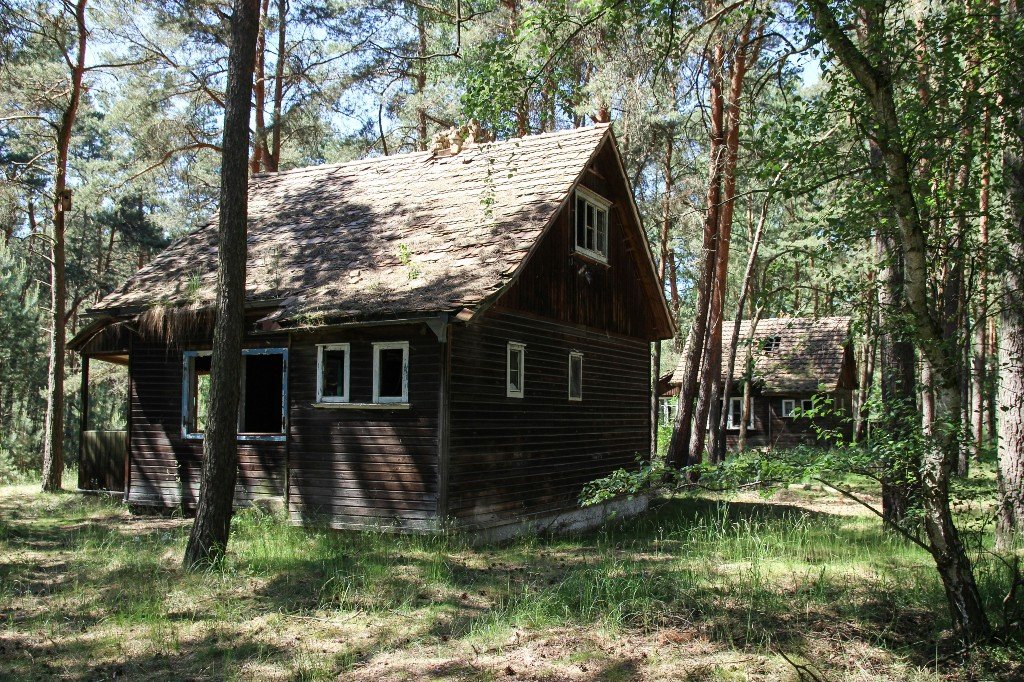
Mundane is the ordinary. It’s not a spectacle, anything showy or elaborate. On social media, the mundane just isn’t sexy, popular or attention-grabbing.
Most people have no appetite for this:
We’re really enthralled and captivated by:
Including myself.
Hopefully we can understand it isn’t about the house – we’re talking about social media content. The mundane in our culture today is not enough to be happy or content, and it certainly isn’t brag worthy.
I often portrayed “the quiet life” as being mundane (prude, even), but I didn’t always see it as a desirable or sought after thing. As I got older, that began to change, and I started to understand the beauty behind it and to appreciate the mundane that we’re susceptible to treating as inconvenient, meaningless, tedious, stale and indifferent.
Moreover, when I stopped using social media, I felt this new richness in life I didn’t before and started embracing the mundane as blessings.
I lost people (in my life)
Social media had its fullest intentions to bring people together – in digital proximity. I do get that, and I even saw that played out. Then something along the way changed, and not for the better (or right reasons).
Like I’ve said before, I think we’re often given good things… only for us (creators and users) to misuse or abuse it. For instance, IMO, social media seems to have replaced face-to-face connections. Slowly over time, we’ve become so accustomed to the idea (and value) of having 1,000 followers versus a handful of real friends.
Consequently, real life friendships have transformed. Social media has undermined the value of real effort that isn’t instantaneous or passive. Social media has perpetuated and even normalized low to no effort, and at the same time introduced hyper-connectivity.
I reached a point where I had to genuinely ask myself: would my real friends (and people that truly care about me) reach out if I didn’t have social media? Would I even cross their mind if it weren’t for scrolling past a recent post or story on social media?
As a result of no longer using social media, I lost people. Consequently,
- I narrowed my inner circle,
- people no longer had passive, eavesdropping access to my life, and
- fewer people, who I thought were friends in real life, actually reached out to me.
Also,
- I lost access to that passive connection to others (being a part of the group simply by being on social media),
- I let go of a false sense of social security in online community, and
- my eyes opened to the dangers and negative impact of constant hyper-connectivity.
The number of followers I had was in no way a reflection of how many people 1. actually knew me, 2. cared about me, and 3. were genuine friends beyond Likes and comments.
I realized how much I didn’t want relationships in my life that only existed because of social media, even if that ended up being far and few. And that’s exactly what feels like happened once I walked away for good.